

Healthcare Conversational AI: Boost Efficiency & Patient Care in 2025
Still dealing with long patient wait times, overflowing phone lines, and endless administrative tasks? Many healthcare organizations face these daily challenges, often stretching staff thin and impacting patient satisfaction. The good news is that healthcare conversational AI offers a practical way to streamline operations, reduce costs, and improve the overall patient experience.
For small to medium-sized healthcare practices, these common pain points—like missed calls or scheduling chaos—can severely impact growth and patient trust. Growth Design Studio's AI automation solutions, including Voice AI Agents, directly address these challenges, ensuring no patient inquiry goes unanswered and administrative burdens are significantly reduced.
By the end of this article, you'll understand how these AI tools work, their core benefits, and how they drive real results in healthcare settings, aligning with 2025 healthcare technology trends.
Understanding Healthcare Conversational AI: Basics & Evolution
Conversational AI in healthcare isn't just a futuristic concept; it's a set of tools designed to automate interactions between patients and providers. Think of it as a smart digital assistant that understands and responds to human language.
This technology helps healthcare systems manage routine inquiries, schedule appointments, and provide information efficiently, reducing the burden on human staff and improving access to care. For a local medical practice, this could mean automating initial patient screenings or prescription refill requests, much like how a roofing company might automate lead qualification, saving staff 20+ hours per week.
What is Conversational AI in Healthcare?
At its core, conversational AI in healthcare involves systems that can understand, process, and respond to human language. These systems can communicate through text (like chatbots) or voice (like virtual assistants). They use advanced algorithms to interpret patient queries and deliver relevant information or actions, like connecting them to a nurse or scheduling a visit, making AI virtual assistant healthcare a powerful tool.
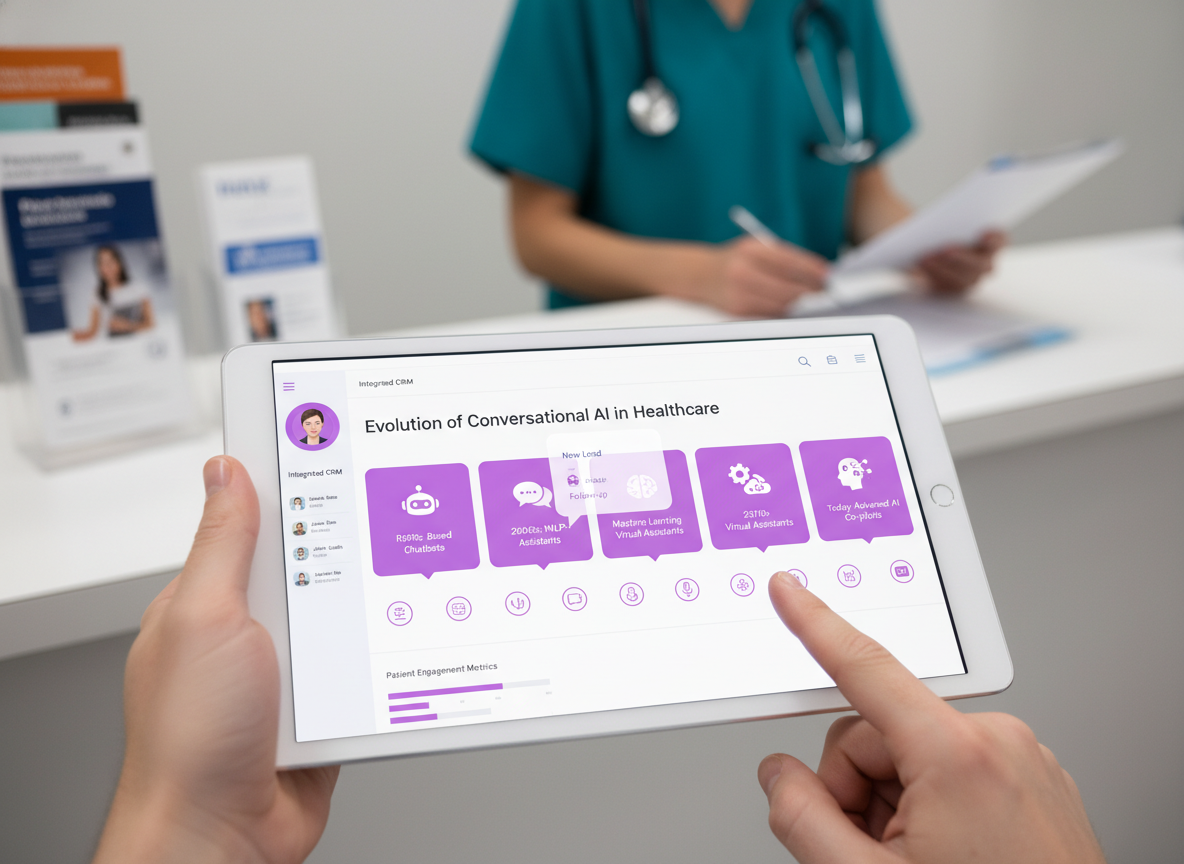
Evolution of AI in Patient & Provider Interactions
AI's journey in healthcare has moved from simple rule-based chatbots to sophisticated systems capable of complex dialogue. Early versions handled basic FAQs, but modern conversational AI now supports multi-turn conversations, offering personalized assistance and even helping with clinical support. This shift allows for more natural and effective interactions, closely mimicking human communication.
Key Components: NLP, Machine Learning, and Integration
Conversational AI relies on several key technologies to function effectively. Natural Language Processing (NLP) allows the AI to understand the intent behind a patient's words. Machine Learning (ML) helps the AI learn from interactions, constantly improving its accuracy and responses. Crucially, these systems need seamless integration with existing healthcare systems, such as Electronic Health Records (EHRs), to access and update patient information securely. For SMBs, Growth Design Studio emphasizes robust, yet affordable, CRM integration with platforms like Zoho, HubSpot, and LeadSquared, ensuring vital patient data is always synchronized without requiring complex, custom IT solutions.
Transforming Operations: Key Applications and Benefits for Healthcare
The real power of healthcare conversational AI shines in its ability to transform everyday healthcare operations. It helps both patients and staff, making processes smoother and more accessible. Organizations use these tools to enhance various aspects of their service delivery.
Enhancing Patient Engagement and Access (FAQs, Appointment Scheduling)
One of the biggest wins for conversational AI is how it improves patient engagement. Patients can get instant answers to common questions about services, opening hours, or test preparation, often 24/7. This immediate support reduces frustration and helps patients feel more connected to their care providers.
Virtual assistants can also handle appointment scheduling and rescheduling, making it easier for patients to manage their healthcare needs and helping to overcome staffing shortages. By leveraging Growth Design Studio's Voice AI Agents, healthcare providers can achieve 24/7 customer engagement, drastically reducing missed calls and ensuring a consistent patient experience akin to top-tier real estate or automotive services. This boosts overall chatbot customer service in healthcare.
Streamlining Administrative Workflows and Reducing Call Volume
Administrative tasks often consume a significant portion of staff time. Conversational AI can automate many of these, like pre-registration, insurance verification, and answering billing inquiries. By doing so, it significantly reduces the volume of calls to service centers, freeing up human staff to focus on more complex cases or direct patient care.
This automation helps healthcare systems optimize costs and improve overall efficiency. Small to medium-sized healthcare practices frequently experience a 50% cost reduction in administrative overhead by implementing such solutions, allowing them to reinvest in patient care.
Improving Clinical Support, Documentation, and Staff Efficiency
Beyond patient-facing interactions, healthcare conversational AI offers valuable support for clinical teams. Generative AI, for example, can assist with clinical documentation by summarizing conversations and preparing initial notes, reducing the time physicians spend on administrative tasks. Tools like Abridge transform clinical conversations into structured documentation, enhancing healthcare understanding and improving patient care.
This support means staff can focus more on patient care and less on paperwork. This level of workflow automation from Growth Design Studio ensures that valuable staff time, sometimes 20+ hours per week, is redirected from tedious data entry to high-value patient interactions, improving both staff morale and patient outcomes.

Driving Value: Quantifiable Outcomes and Success Stories
Implementing healthcare conversational AI isn't just about adopting new technology; it's about seeing measurable improvements in cost, patient satisfaction, and operational effectiveness. These tools deliver tangible results that benefit both healthcare organizations and their patients.
Reducing Operational Costs and Maximizing ROI
Healthcare systems are always looking for ways to reduce operational costs without sacrificing quality of care. Conversational AI helps here by automating repetitive tasks, which lowers the need for extensive human intervention in areas like call centers.
For instance, using AI to manage routine inquiries can lead to a noticeable reduction in staffing costs and improve financial impact. This focus on efficiency drives a strong return on investment (ROI). With Growth Design Studio’s SMB-focused approach, practices typically achieve a 200–400% ROI in Year 1, making advanced AI automation an affordable and highly profitable investment for businesses in healthcare and other local services.
Boosting Patient Satisfaction and Health Outcomes
When patients can easily access information and schedule appointments, their overall satisfaction with their healthcare provider improves. Healthcare conversational AI offers instant responses and personalized interactions, making healthcare more convenient and less intimidating. This enhanced experience can lead to better patient adherence to treatment plans and improved health outcomes. AI-powered tools supplement patient interactions, making the experience smoother.
Growth Design Studio's multi-language support further enhances this, ensuring that diverse patient populations receive equally accessible and high-quality care, a differentiator crucial for many local service providers.
Case Studies: Real-World Implementations of Healthcare Conversational AI
Many organizations are already seeing success. For example, Tampa General Hospital partnered with Hyro to roll out AI voice agents that immediately answer patient questions and direct them to appropriate points of care. This led to a decrease in call center volume.
Another example involves implementing an AI-powered conversational system using real-time text-to-speech technologies for seamless customer interactions. These real-world examples show how conversational AI is making a difference.

Implementation Challenges, Ethical Considerations & The Future Landscape
While the benefits are clear, implementing healthcare conversational AI comes with its own set of challenges. Addressing these ensures the technology is used responsibly and effectively.
Navigating Data Privacy, Security (HIPAA), and Bias in AI
Healthcare data is highly sensitive, making data privacy and security paramount. Any conversational AI solution must strictly adhere to regulations like HIPAA. This is a critical aspect, especially for telemedicine app development.
Additionally, it's crucial to address potential biases in AI algorithms to ensure health equity through conversational AI. Studies aim to identify activities that reduce bias in conversational AI, making their designs and implementation more equitable. Ensuring fairness and transparency is key to building trust.
Seamless Integration with Electronic Health Records (EHRs)
For healthcare conversational AI to be truly effective, it needs to integrate smoothly with existing Electronic Health Record (EHR) systems. This integration allows the AI to access and update patient information accurately, providing a more comprehensive and personalized experience. Without proper integration, the AI's utility would be limited, as it wouldn't have the necessary context for patient interactions.
Growth Design Studio specializes in seamless CRM and workflow automation integration, which is critical for healthcare SMBs to connect their AI agents with existing systems like patient management software, ensuring data consistency and eliminating manual data transfer.
Emerging Trends: Generative AI and Personalized Patient Experiences
The future of healthcare conversational AI is bright, with generative AI leading the way. These advanced AI models can create more natural and nuanced conversations, offering deeply personalized patient experiences. Generative AI platforms can collect information, answer questions, and assist with documentation, making them a powerful tool for transforming healthcare delivery. This personalization will continue to improve patient engagement and support. Looking ahead to 2025, policymakers are also increasingly focusing on AI policy within healthcare, highlighting its growing importance and the need for robust ethical frameworks.

Frequently Asked Questions
How do healthcare conversational AI systems ensure secure patient data?
Healthcare conversational AI systems prioritize data security by adhering to strict regulations like HIPAA. They employ encryption, access controls, and secure integration protocols with Electronic Health Records (EHRs) to protect sensitive patient information. Regular audits and compliance checks are also essential to maintain high security standards.
Can patients use dedicated healthcare conversational AI apps for self-service?
Yes, many healthcare providers are developing or implementing dedicated healthcare conversational AI apps. These apps allow patients to perform various self-service functions, such as scheduling appointments, requesting prescription refills, accessing educational content, and getting answers to common health questions 24/7, thereby enhancing convenience and accessibility.
Conclusion
By using healthcare conversational AI, healthcare providers can move beyond manual processes and towards a more responsive, patient-centric system. This not only frees up valuable staff time but also ensures patients receive the timely, accurate information they need. From streamlining administrative tasks and reducing operational costs to enhancing patient satisfaction and supporting clinical teams, the benefits are clear. For SMBs, the rapid 3–7 day deployment offered by Growth Design Studio means these advanced AI solutions are accessible and scalable, enabling quick transformation and sustained growth. If you'd like us to set up a powerful automation workflow that integrates conversational AI into your healthcare operations, book your free automation audit today.