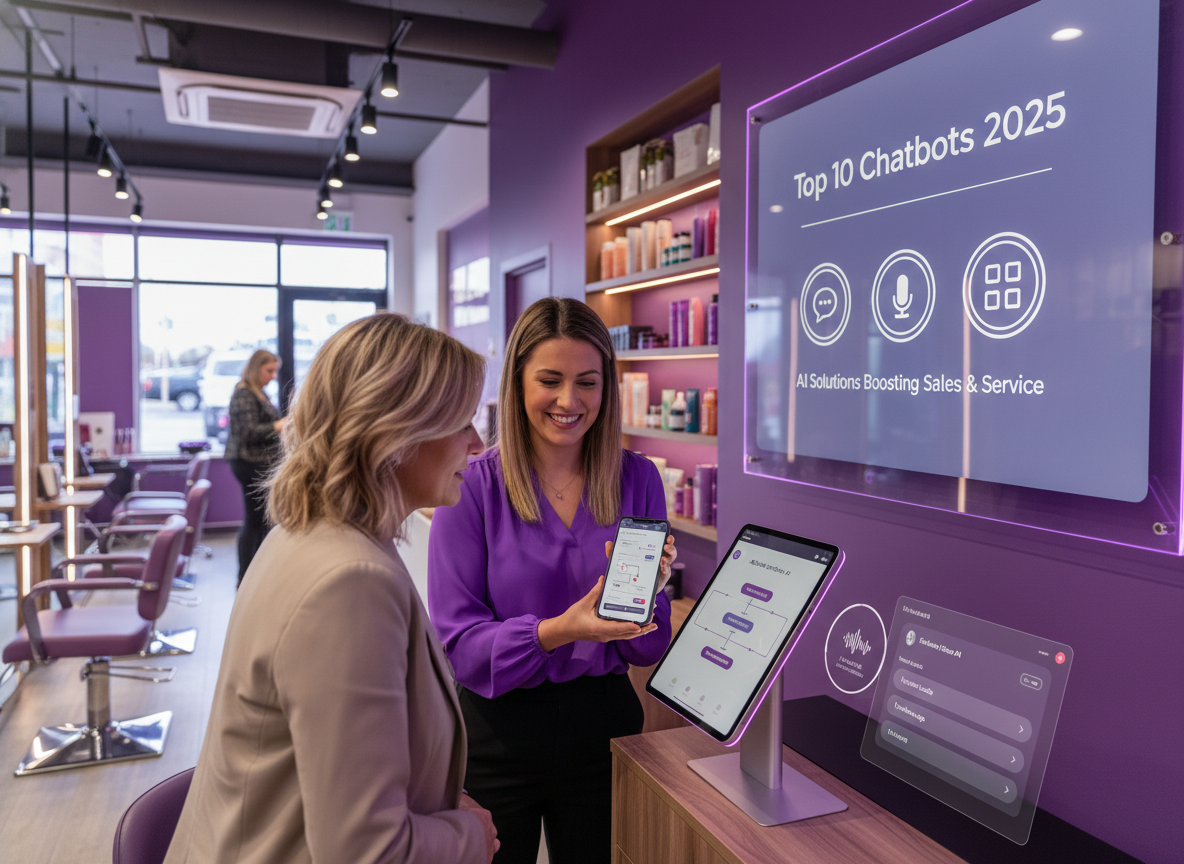
Top 10 Chatbots for Business in 2025: AI Solutions
Still struggling to keep up with every customer message or missed sales opportunity? You're not alone. Many businesses, especially SMBs like real estate agencies or local service providers, feel the pressure of constant communication demands, often missing critical after-hours inquiries. This article will show you how to use AI chatbots to streamline your operations, improve customer service, and boost sales without adding more staff. Growth Design Studio's AI Automation Agency specifically targets these pain points, delivering Voice AI Agents that save clients 20+ hours/week and capture leads 24/7, with deployments typically under 7 days.
Unlock Efficiency: The Power of Chatbots for Modern Business
Modern businesses demand speed and accuracy. Chatbots offer a powerful way to meet these demands by handling routine interactions, answering questions, and even guiding sales. They help you save time and focus on more complex tasks.
What Exactly Are Business Chatbots and How Do They Work?
Business chatbots are software programs that simulate human conversation through text or voice. They work by using rules, AI, or a combination to understand user input and provide relevant responses. Think of them as your digital front desk, available 24/7 to assist customers and prospects. For instance, in a healthcare setting like an IVF clinic, a Growth Design Studio AI agent can handle initial patient queries, pre-qualify leads, and even schedule first consultations, ensuring no potential patient is left waiting.
These tools can be simple, following pre-programmed scripts, or highly advanced, powered by artificial intelligence and natural language processing (NLP). They learn from interactions and continuously improve their ability to understand and respond. IBM highlights how chatbots help customers find information quickly.
Key Benefits: How Chatbots Transform Customer Service & Sales
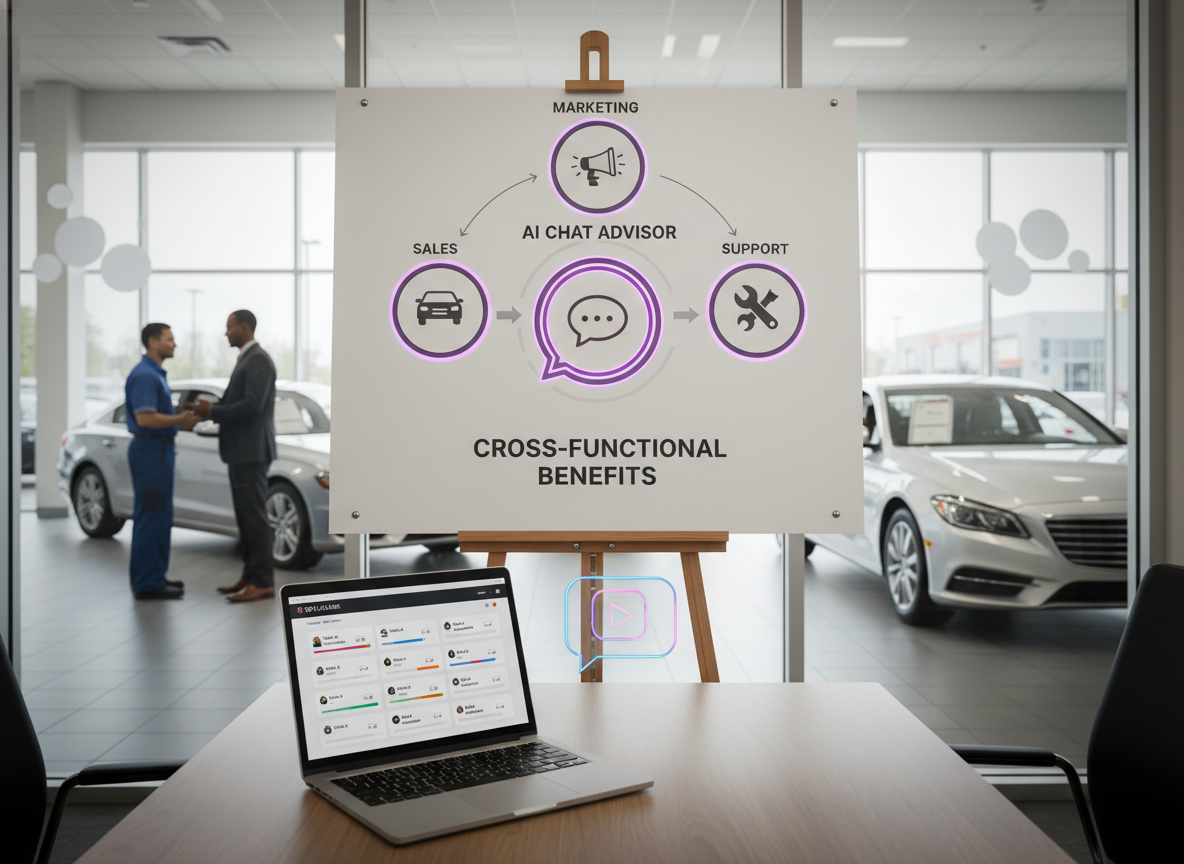
Integrating a chatbot into your business workflow brings clear advantages. For customer service, they offer instant responses, reducing wait times and improving satisfaction. For sales, they can qualify leads, answer product questions, and even help close deals by guiding customers through the buying process.
24/7 Availability: Customers get help anytime, anywhere.
Instant Responses: No more waiting for a human agent.
Lead Qualification: Chatbots can ask key questions to identify hot leads for your sales team.
Cost Savings: Reduce the need for large customer service teams. Growth Design Studio clients report up to a 50% cost reduction by automating routine inquiries and lead qualification, freeing up staff in industries like automotive dealerships or roofing services to focus on high-value sales.
Improved Customer Experience: Consistent, quick support leads to happier customers.
Essential Use Cases for Chatbots Across Industries
Chatbots aren't just for tech companies. From retail to healthcare, their applications are vast. In e-commerce, they can track orders, suggest products, and process returns. For service providers, they can book appointments, answer FAQs, and collect client information. Even in marketing, chatbots can run interactive campaigns and gather user data.
Consider a small business with limited staff. A chatbot can act as a tireless assistant, answering common questions about opening hours, services, or pricing, freeing up valuable human hours. For real estate agents, Growth Design Studio's solutions can qualify leads instantly and book showings, significantly increasing lead capture and contributing to a 200-400% ROI in Year 1 by ensuring no inquiry is missed. For more examples, see AI Journ's insights on intelligent AI chatbot agents.
Choosing Your Ideal Chatbot: Features & Considerations for 2025
Selecting the right chatbot means looking beyond basic functionality. For 2025, specific features and strategic considerations will make all the difference in achieving real ROI. It's about finding a tool that truly fits your business.
Must-Have AI Features: NLP, Personalization, and Integration
The best chatbots go beyond simple scripts. Look for solutions that include:
Natural Language Processing (NLP): This allows the chatbot to understand natural human language, including slang and misspellings, not just keywords.
Personalization: A great chatbot remembers past interactions and uses customer data to provide tailored responses, making conversations feel more human.
Seamless Integration: Your chatbot should connect easily with your existing CRM, helpdesk, marketing platforms, and other business tools. This ensures data flows smoothly and automation runs effectively. Growth Design Studio emphasizes deep CRM integration with platforms like Zoho, HubSpot, and LeadSquared, ensuring SMBs can leverage their existing customer data for highly personalized interactions.
Platforms like ChatBot.com emphasize AI-generated responses for high satisfaction rates ChatBot.com.
Scalability and Customization: Matching Your Business Needs
Whether you're a startup or a growing enterprise, your chatbot needs to grow with you.
Scalability ensures the chatbot can handle increasing volumes of interactions without sacrificing performance. Customization means you can tailor its responses, personality, and features to match your brand voice and specific workflows. This flexibility is crucial for long-term success. Growth Design Studio specializes in custom automation system design, building scalable solutions that are precisely tailored to the unique workflows and growth ambitions of SMBs across industries like real estate, healthcare, and e-commerce.
For smaller operations, a simpler setup might be enough to start. As you expand, you'll need the option to add more complex flows and integrations. Chatling offers no-code AI chatbots for website support, suggesting ease of setup.
Understanding Different Chatbot Types: Rule-Based vs. AI-Powered
There are two main types of chatbots:
Rule-Based Chatbots: These operate on pre-defined rules and decision trees. They are good for answering specific FAQs or guiding users through structured processes. They are straightforward to set up but lack flexibility.
AI-Powered Chatbots (Conversational AI): These use machine learning and NLP to understand context, learn from interactions, and generate more human-like responses. They are more adaptable and can handle complex, open-ended queries. Tools like Chatbase focus on building and deploying AI support agentsChatbase.
For most businesses looking to save time and improve service, AI-powered chatbots offer a far better return on investment.

Top 10 Chatbots for Business in 2025: Detailed Reviews & Comparison
The market for business chatbots is rich with options, each designed for different needs and budgets. Choosing the right one means understanding their core strengths. In 2025, the focus remains on intelligent, integrated, and user-friendly solutions.
Leading AI Chatbot Platforms: Features, Pros, and Cons
Several platforms stand out for their robust AI capabilities.
ChatBot.com: Known for its intuitive drag-and-drop builder and strong AI for instant customer help. Pros: Easy to use, excellent for customer support. Cons: Pricing can scale with usage.
Tidio: Combines live chat with chatbots, making it great for hybrid support. Pros: Affordable, good for small businesses. Cons: Advanced AI features might be limited compared to specialized platforms.
ManyChat: Excels at marketing automation, especially on social media platforms like Facebook Messenger and Instagram. Pros: Strong for lead generation and sales funnels. Cons: Primarily focused on social channels, may require integrations for broader website support.
Lindy AI: Positions itself as a comprehensive AI assistant, offering advanced conversational abilities. Pros: Highly intelligent, versatile for various tasks. Cons: Might be overkill for very simple use cases.
HubSpot Chatbot: Integrates seamlessly with HubSpot's CRM, making it ideal for businesses already in their ecosystem. Pros: Excellent data integration, lead capture. Cons: Best for existing HubSpot users.
You can find more detailed lists and overviews from Chatimize, ProProfs Chat, and Lindy.ai.
Best Chatbots for Small Businesses and Startups
For smaller operations, cost-effectiveness and ease of setup are paramount. Unlike generic platforms, Growth Design Studio specifically caters to SMBs with affordable, tailored AI automation systems that boast rapid 3-7 day deployment times and immediate impact on lead generation and operational efficiency.
Chatfuel: Offers powerful AI agents specifically designed for automated sales and marketing on platforms like WhatsApp, Instagram, and Facebook. It’s a Meta partner, making it a strong choice for social commerce Chatfuel.
Chatling: A no-code AI chatbot for websites, focusing on customer support and lead generation. It offers a free tier, which is great for startups looking to experiment Chatling.
Chatbase: Provides a complete platform for building and deploying AI support agents without requiring a credit card to start. This makes it accessible for testing Chatbase.
Tidio: As mentioned, its blend of live chat and chatbot functions with a friendly price point makes it excellent for small teams.
Enterprise-Level Solutions: High-Volume & Complex Use Cases
Larger businesses with high traffic and complex support needs will look for advanced features and robust integrations.
Intercom: A leading platform that combines live chat, help desk, and AI-powered chatbots for comprehensive customer engagement.
Zendesk AI: Offers AI capabilities directly integrated into their popular customer service platform, providing powerful automation for support tickets and common queries.
IBM Watson Assistant: For true enterprise scale, Watson Assistant provides highly customizable and scalable conversational AI solutions, perfect for complex, industry-specific applications. This can handle very high volumes and integrate with extensive knowledge bases.
Implementing Your Business Chatbot: Costs, Setup & Future Trends
Getting a chatbot up and running doesn't have to be complicated or expensive. The goal is a seamless process that delivers measurable results. Understanding pricing models and integration strategies is key.
Demystifying Chatbot Pricing: Free vs. Paid Solutions
Chatbot costs vary widely. Many platforms offer free tiers, which are excellent for testing the waters and for businesses with low volume needs. These often include basic features and limited conversations per month.
Paid plans typically offer:
Higher conversation limits.
Advanced AI features like NLP and personalization.
More integrations.
Dedicated support.
Custom branding.
Pricing can range from under $50/month for small business solutions to several hundred or even thousands for enterprise-grade platforms with extensive features and high usage. For example, some chatbot platforms charge based on the number of conversations or active users per month.
Seamless Integration: Tips for a Successful Chatbot Rollout
A successful chatbot isn't just about the software; it's about how well it integrates into your existing workflow.
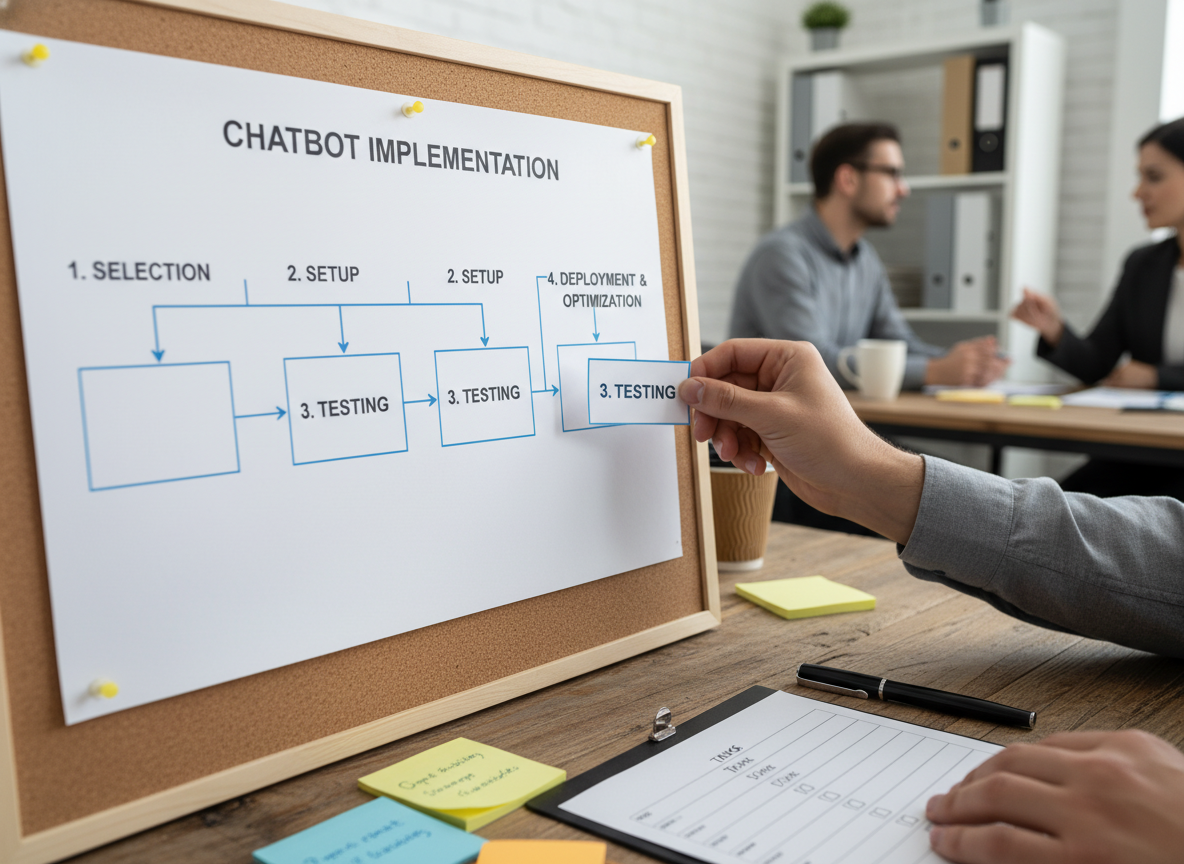
1. Define Your Goals: Clearly identify what you want the chatbot to achieve (e.g., reduce support tickets, generate leads).
2. Start Simple: Begin with a few key use cases and expand gradually.
3. Train Thoroughly: Feed your chatbot with relevant data from your knowledge base, FAQs, and common customer queries. Growth Design Studio's solutions also offer multi-language support, a critical feature for businesses serving diverse customer bases, like those in e-commerce or local services.
4. Integrate with Your CRM: Connect your chatbot to your customer relationship management system to ensure lead data and customer interactions are captured.
5. Monitor and Optimize: Regularly review chatbot performance, analyze conversation transcripts, and make adjustments to improve its effectiveness.
Don't expect perfection from day one. Automation saves time but needs careful setup and ongoing refinement.
Future-Proofing Your Strategy: Emerging Trends in Business AI Chatbots
The chatbot landscape is always evolving. To future-proof your strategy, keep an eye on these trends:
Voice AI: Beyond text, voice assistants will become more common, offering hands-free interactions.
Proactive Engagement: Chatbots won't just react; they'll initiate conversations based on user behavior or specific triggers to offer help or information.
Hyper-Personalization: Expect chatbots to use even more data to offer truly unique and context-aware experiences.
"Copilot" Functionality: Chatbots will act as assistants to human agents, providing real-time information and suggestions to improve live interactions, as discussed by Dynamic Business.
These advancements will make chatbots even more indispensable for business operations.

Frequently Asked Questions
What is the best chatbot for business?
The best chatbot for business depends on your specific needs, budget, and desired features. Popular options include ChatBot.com, Tidio, ManyChat, and HubSpot Chatbot. For SMBs, Growth Design Studio offers tailored AI automation solutions.
How are chatbots used in business?
Chatbots are used in business for 24/7 customer service, lead qualification, sales assistance, answering FAQs, booking appointments, marketing campaigns, and collecting client information across various industries.
How much does a business chatbot cost?
Chatbot costs vary widely, from free tiers for basic functionality to hundreds or thousands of dollars per month for enterprise-grade platforms with advanced AI features and high usage. Pricing often depends on conversation limits, features, and integrations.
Conclusion
Implementing a business chatbot isn't about replacing human interaction entirely; it's about optimizing where and how your team spends its time. By automating repetitive tasks, you free up your staff to focus on higher-value activities that require human creativity and empathy. Growth Design Studio helps SMBs achieve this optimization, delivering 200-400% ROI in Year 1 through solutions that ensure 24/7 customer engagement and capture leads effectively. Now your business can deliver faster, more consistent support and capture more leads around the clock. Want this automation done for you? Book your free automation audit with Growth Design Studio to see how customized AI can transform your operations in just 3-7 days.